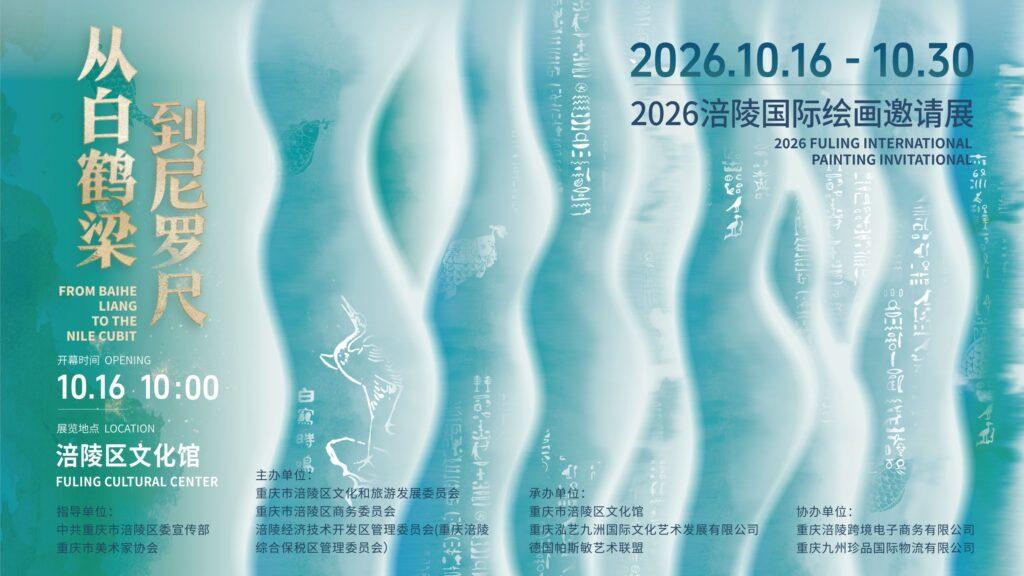
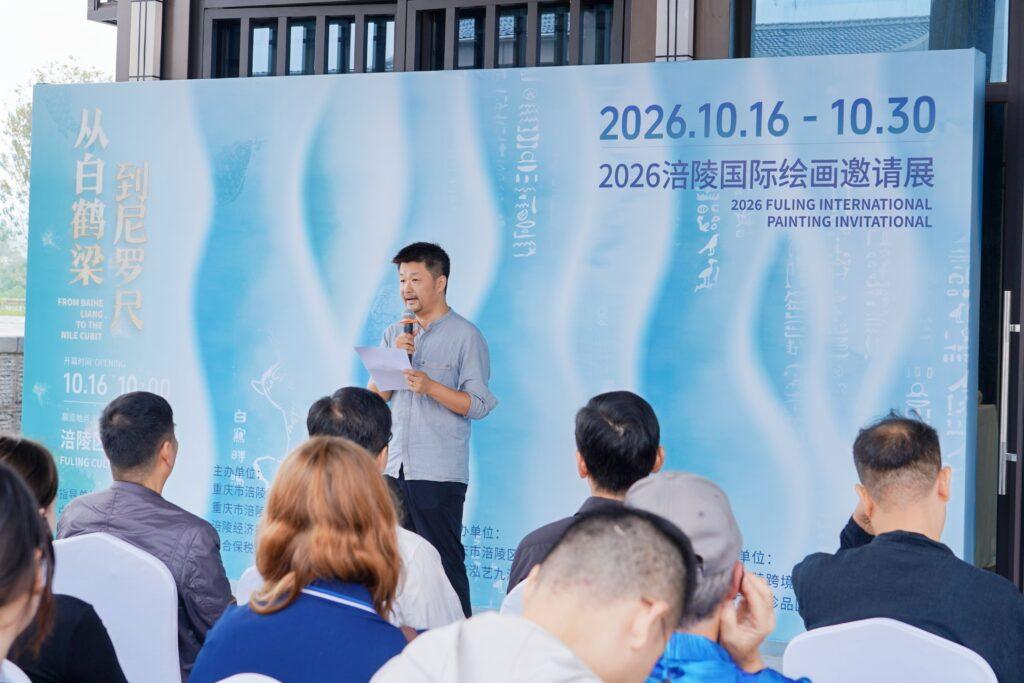
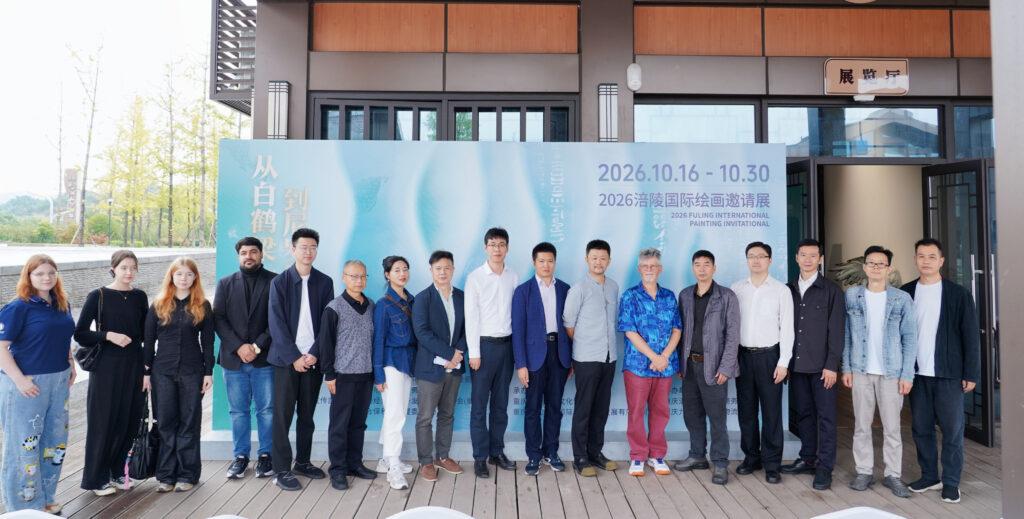
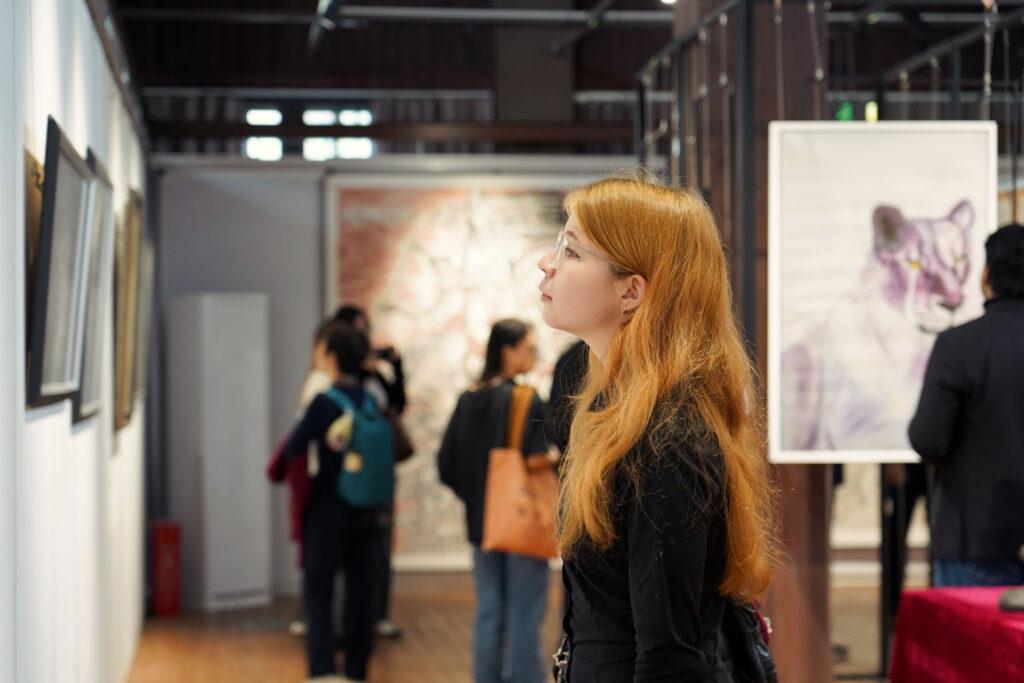
On the morning of October 16, the 2026 Fuling International Painting Invitational Exhibition, titled “From Baiheliang to the Nilometer,” officially opened at Fuling Cultural Center (Hall 2) in Chongqing. The exhibition is jointly hosted by the Fuling District Commission of Culture and Tourism Development of Chongqing, the Fuling District Commerce Commission of Chongqing, and the Administrative Committee of Fuling Economic and Technological Development Zone (Administrative Committee of Chongqing Fuling Comprehensive Bonded Zone). It is co-organized by the Fuling District Cultural Center, Chongqing Hongyi Jiuzhou International Culture and Art Development Co., Ltd., and Pashmin Art Consortia, a leading German art institute active both in China and internationally. The exhibition will run until October 30.
Fuling is home to Baiheliang, a site of outstanding ancient hydrological heritage. The Baiheliang stone inscriptions have been hailed as “the world’s first ancient hydrological station.” Together with Egypt’s Nilometer, they are ancient hydrological observation sites with a history spanning more than a thousand years, preserving the memory of the great river civilizations of the Yangtze and the Nile, respectively. Against the backdrop of the joint initiative to seek World Heritage status for Baiheliang and Egypt’s Nilometer, the exhibition fosters a dialogue between civilizations across continents and brings the wisdom of ancient river civilizations to life through contemporary art.
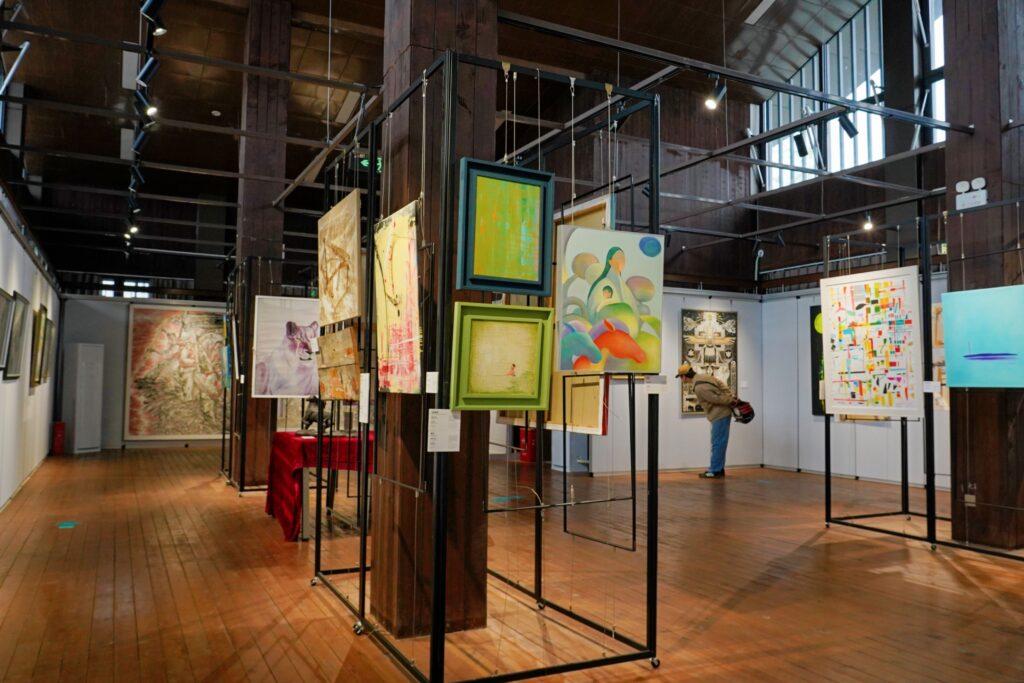
The exhibition presents 75 paintings and sculptures by 40 artists from China, Germany, Austria, and other countries. Benefiting from the role of the Chongqing Fuling Comprehensive Bonded Zone as a platform for opening up, the exhibition facilitates the cross-border movement of works by international participants and explores innovative approaches to bonded display and trading in the cultural sector, while broadening access to public cultural offerings. Works by Chinese and international artists are shown side by side, allowing artistic traditions from different regions to meet and interact while retaining their distinctive characteristics. Visual art thus becomes a bridge for cross-cultural exchange. Within the exhibition hall, the cultural heritage of the great rivers of the East mingles with imagery from ancient Egyptian civilization, as historical symbols resonate with contemporary artistic expression. Visitors are invited to experience an artistic dialogue that spans continents.