In the paintings of Danish artist Martin Lundby Haupt, the human face becomes a field of artistic experimentation in which colour, form, and painterly expression acquire significance beyond the reproduction of physical appearance. While his portraits remain grounded in recognizable human features, their visual character emerges from the relationship between carefully constructed facial structures and unconventional chromatic choices. By introducing saturated blues, vibrant greens, and contrasting warm tones into his representations, Haupt challenges the expectation that portraiture must remain faithful to natural appearance, demonstrating instead how the expressive possibilities of painting can transform the viewer’s perception of an individual. His artistic language develops through the interplay between observation and interpretation, allowing colour to become an essential element in the construction of human presence.
Born in Denmark in 1977, Haupt is a multidisciplinary artist and musician who began working intensively with oil painting in 2023. His growing engagement with the medium has encouraged an exploration of pigments, layered surfaces, and increasingly expressive brushwork, while his fascination with the individuality of facial features remains central to his artistic practice. Particularly important are the eyes, which frequently establish the visual focus of his portraits and provide a sense of continuity even when the surrounding facial colours depart significantly from naturalistic representation. This relationship between recognizable form and chromatic invention gives his work its distinctive visual tension.
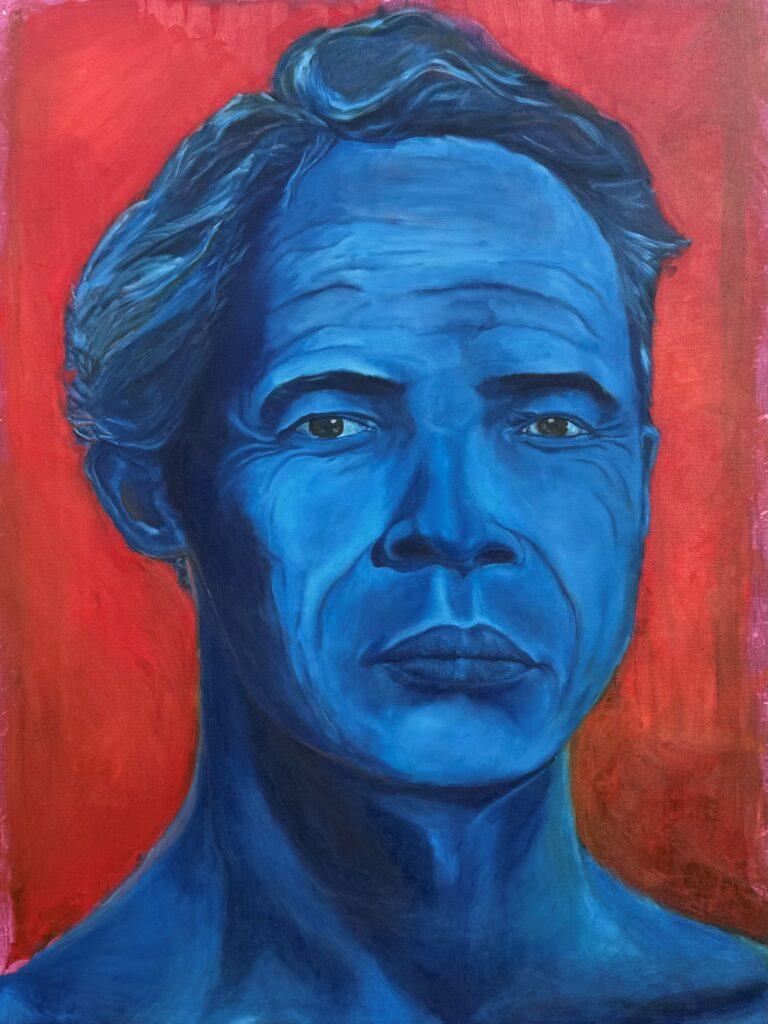
The expressive independence of colour is particularly evident in Blue (2025), where the subject’s face is rendered almost entirely through variations of blue against a saturated red background. The composition is organized around a strong contrast between cool and warm colours, intensifying the visual prominence of the figure while establishing a dynamic relationship between foreground and background. Rather than flattening the face into a monochromatic surface, Haupt employs subtle variations in light and dark blue to articulate the forehead, cheekbones, nose, and mouth, preserving the illusion of three-dimensional volume. The red background, comparatively uniform in its intensity, reinforces the sculptural quality of the face, allowing the viewer to concentrate upon the interaction between facial modelling, colour saturation, and the direct gaze.
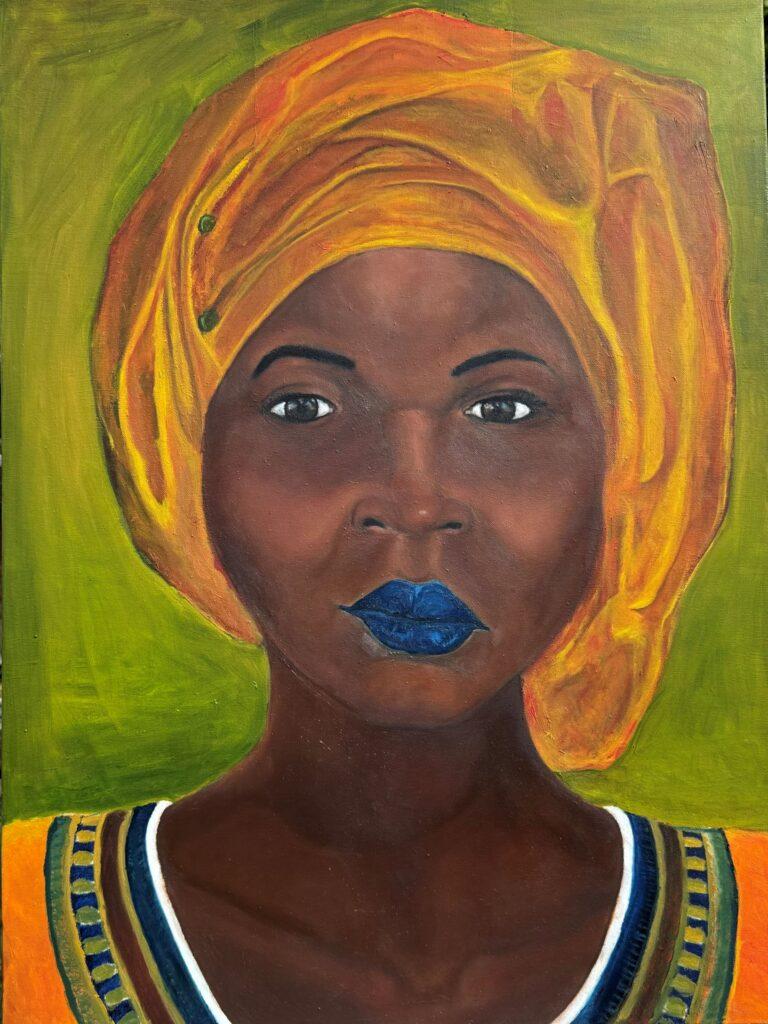
In Mariam (2024), Haupt develops a different chromatic arrangement, combining a luminous orange-yellow headwrap with a saturated green background and distinctive blue lips. Unlike Blue, where a single dominant hue governs the figure, Mariam depends upon the interplay of several contrasting colours distributed across the composition. The warm headwrap frames the face and draws attention toward its central features, while the green background establishes a contrasting field that strengthens the figure’s visual presence. The blue lips introduce an unexpected chromatic accent, interrupting the otherwise naturalistic rendering of the complexion and creating a visual relationship with the darker tones of the eyes and clothing. Through these carefully positioned contrasts, Haupt demonstrates how colour can direct attention and establish pictorial rhythm without depending entirely upon descriptive realism.
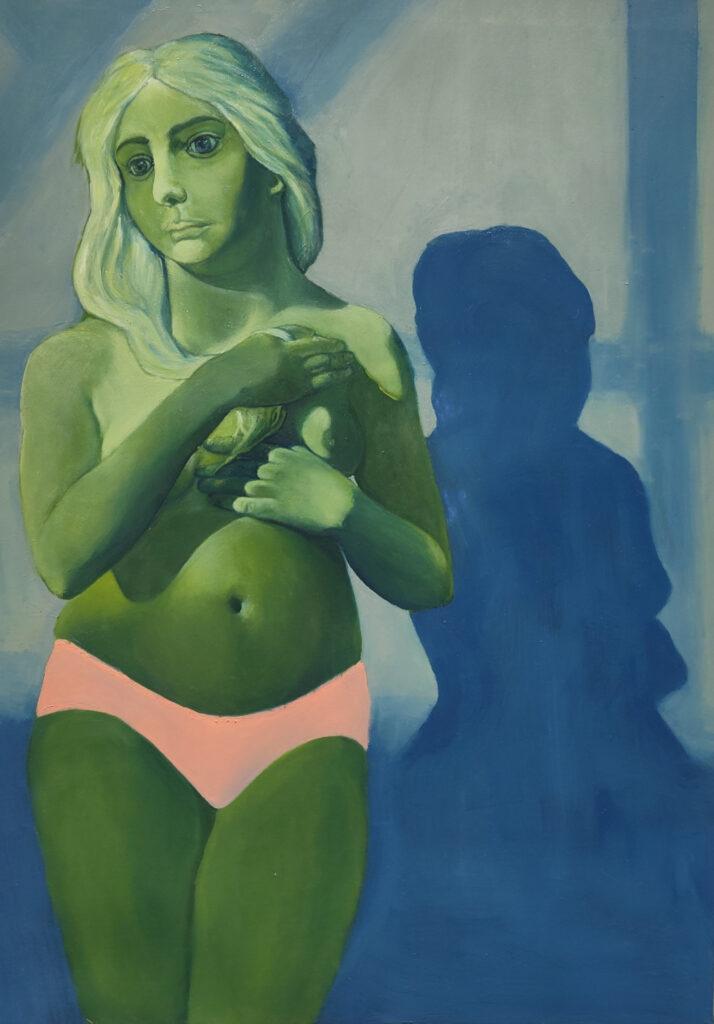
A more complex relationship between colour and spatial organization emerges in Expecting (2026), which depicts a pregnant woman rendered in green tones against a predominantly blue environment. The figure’s luminous green body stands in pronounced contrast to her own darker blue shadow, whose simplified silhouette occupies a substantial portion of the background. This arrangement establishes a dialogue between articulated anatomical form and relatively flat pictorial mass, allowing the shadow to function as both a recognizable consequence of the figure’s presence and an essential compositional element. The bright pink garment introduces a concentrated area of warm colour within the cooler palette, directing attention toward the central figure and balancing the extensive blue surfaces. Through the interaction of colour, contour, and spatial contrast, Haupt creates a composition in which the relationship between body and shadow becomes as visually significant as the represented subject.
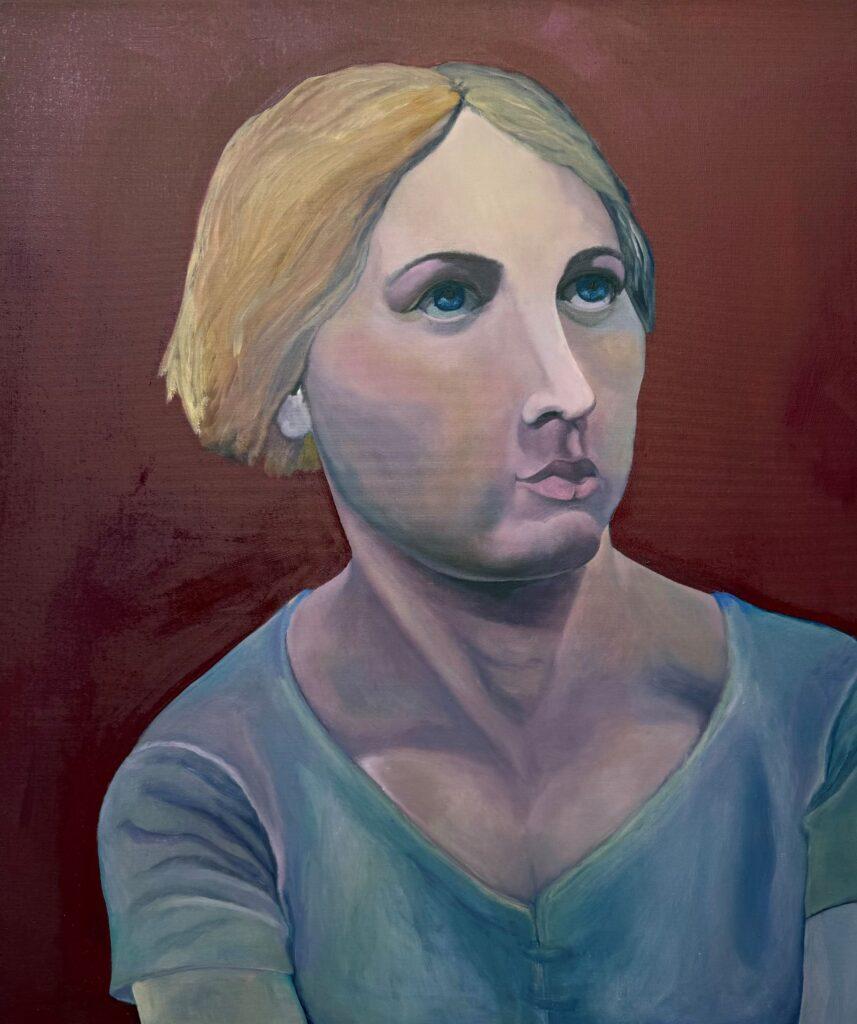
Although Haupt frequently employs unconventional colours, his artistic practice also demonstrates sensitivity to more restrained tonal relationships. In Jeanne (2026), the woman’s pale complexion and carefully modulated blue and violet undertones are set against a deep burgundy background, producing a composition characterized by the contrast between subdued modelling and concentrated colour. The head’s slight turn and the direction of the gaze introduce an asymmetrical quality, while the smooth transitions across the face preserve its volumetric structure. The relatively limited palette allows subtle differences in light, shadow, and facial contour to acquire greater visual importance, demonstrating Haupt’s ability to achieve expressive intensity without relying exclusively upon highly saturated colour.
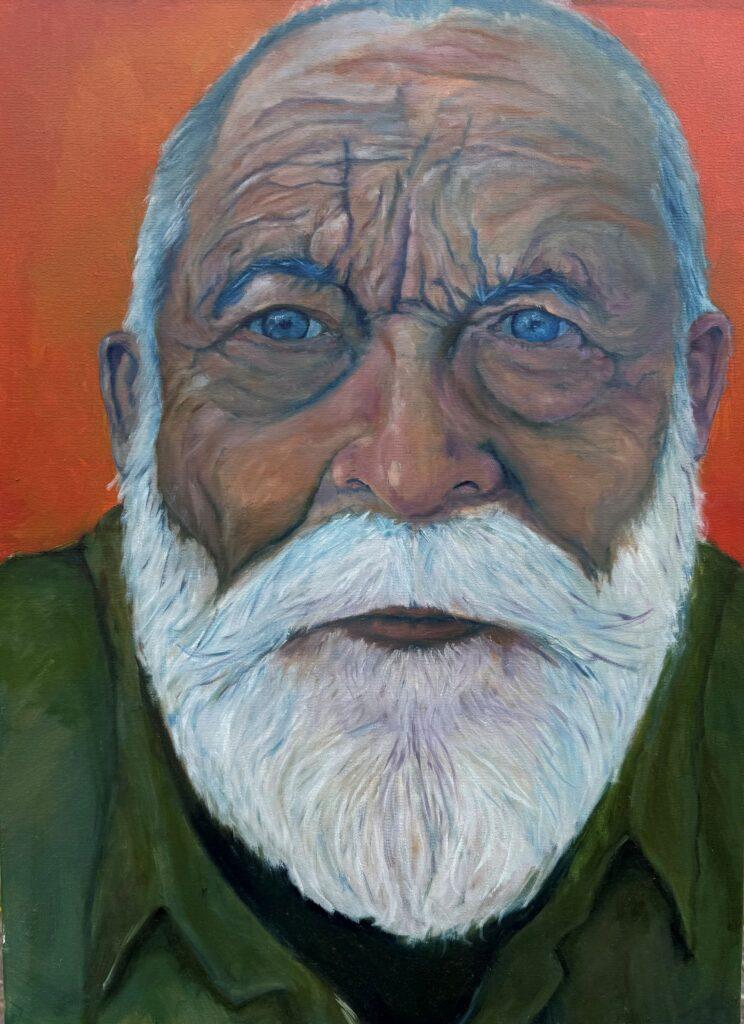
The relationship between facial structure and painterly detail is also central to Thirty Years from Now (2023), an imagined self-portrait depicting the artist in advanced age. The deeply articulated wrinkles, pronounced nose, blue eyes, and expansive white beard produce a densely textured surface in which linear details contribute to the construction of form. Against the warm reddish background, the cooler tones of the face and beard become particularly prominent, while the frontal composition emphasizes symmetry and visual concentration. The painting demonstrates how Haupt employs differences in texture, tonal contrast, and carefully defined contours to construct an image whose expressive character develops from the organization of its formal elements.
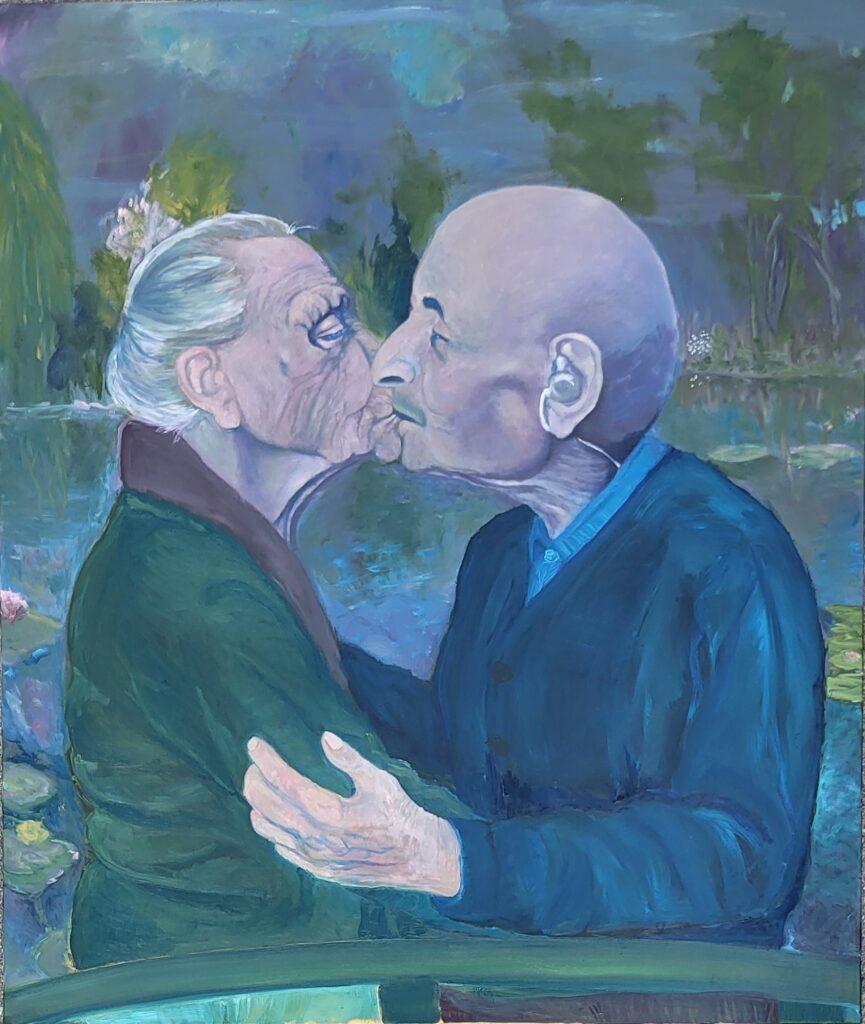
In That Kiss in Giverny (2026), Haupt extends these concerns into a composition involving two figures and a landscape. The elderly couple’s closely positioned faces establish the principal visual focus, while the surrounding greens, blues, and violet tones create a relatively unified chromatic atmosphere. Their interlocking silhouettes and the man’s embracing gesture generate a series of curved forms that guide the viewer’s attention through the composition, reinforcing the visual connection between the figures. The garden setting introduces softer, less precisely defined passages of paint, contrasting with the more carefully articulated faces and hands. Through this balance between detailed figuration and atmospheric surroundings, Haupt establishes a visual continuity between human presence and pictorial environment.
Across these works, Haupt’s painting reveals an evolving interest in the expressive possibilities of colour and form, particularly in the tension between recognizable human anatomy and chromatic transformation. His approach recalls aspects of expressive figurative painting, in which colour operates independently of literal appearance while remaining integral to the construction of visual meaning. Rather than relying upon naturalistic representation alone, he organizes colour, texture, and composition to create distinctive relationships between figure and ground, surface and depth, and visual harmony and contrast.
This developing artistic practice has been presented internationally through exhibitions facilitated by Pashmin Art Consortia. In 2025, Haupt participated in Art Without Borders – Emerging Perspectives, held from 16 October to 16 November at the Hongyi Jiuzhou International Culture and Art Centre in Chongqing, China, exhibiting Blue, Mariam, and Older. His subsequent participation in COGITATIO ARTIUM – Wo der Gedanke zu Kunst wird at Kunsthaus Weiz, Austria, from 25 September to 7 November 2026, brought together works including Jeanne, Expecting, Thirty Years from Now, and That Kiss in Giverny. Through these exhibitions, his paintings have entered into dialogue with international audiences, demonstrating how the expressive organization of colour, form, and pictorial space can transform the familiar human figure into a compelling subject of contemporary artistic exploration.
© Copyright of the text belongs to Dr. Davood Khazaie
Haupt’s Website