The Artist and Her Painterly Language
German artist Yaya Bela Roth has developed a distinctive visual language that unites expressive abstraction with a profound sensitivity to perception, emotion, and inner experience. Working from her studio in Dietramszell, Bavaria, she approaches painting as an intuitive process. Rather than beginning with a fixed image or predetermined concept, Roth allows each work to emerge through a continuing dialogue between color, gesture, material, and surface. Every mark responds to what has already occurred on the canvas, enabling the composition to develop organically through addition, revision, concealment, and discovery.
Her work reflects the influence of Willem de Kooning, Mark Rothko, Helen Frankenthaler, Joan Mitchell, Hermann Nitsch, and Georg Baselitz. Yet Roth transforms the expressive possibilities of abstraction into a personal vocabulary shaped by atmosphere, rhythm, spatial tension, and emotional intensity. Layers of oil paint, wet-on-wet transitions, energetic brushwork, and visible revisions remain integral to her finished compositions. Instead of erasing the traces of creation, she preserves them, allowing viewers to experience the painting as an evolving event.
This understanding of painting as something alive lies at the center of Roth’s practice. Her works neither illustrate stories nor reproduce recognizable reality. They establish spaces of perception in which color becomes a language of movement, feeling, and presence. Through chromatic contrasts, gestural force, and open compositions, Roth encourages sustained looking and individual interpretation.
The year 2026 marked an important stage in her international career. Three major exhibitions in China, Austria, and Germany presented different aspects of her artistic vision. Organized by Pashmin Art Consortia in cooperation with cultural and museum institutions, they demonstrated the versatility of Roth’s practice and its growing international resonance.
China Debut: New Visions for a New Audience
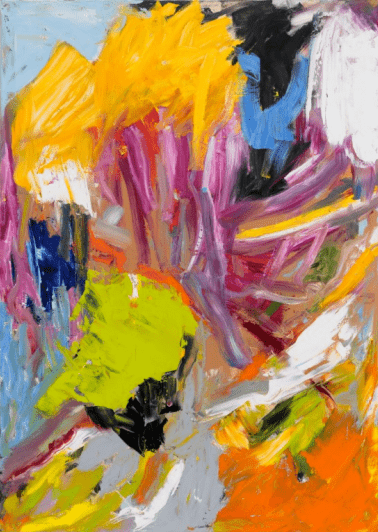
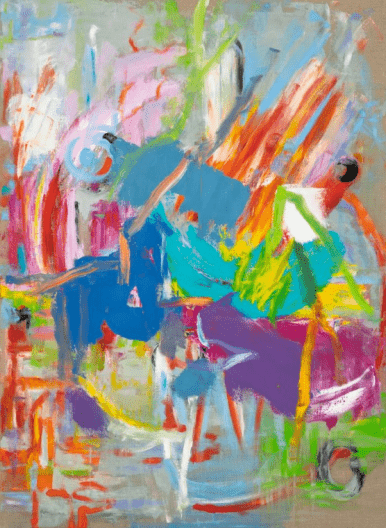
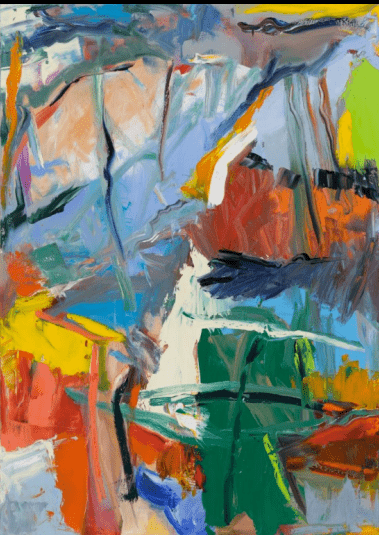
Roth’s Chinese debut, “New Visions for a New Audience”, was presented at the Hongyi Jiuzhou International Culture and Art Centre in Chongqing from 11 March to 14 April 2026. The exhibition introduced Chinese audiences to her expressive painterly language through works from the acclaimed “Farbfelder” series, including “Farbfelder 214”, “Farbfelder 221”, and “Farbfelder 222”.
These paintings demonstrate Roth’s ability to transform color into an emotional and spatial force. Vibrant blues, luminous oranges, radiant yellows, acid greens, and energetic magentas overlap, collide, and respond to one another across the canvas. Their dynamic relationships generate depth, rhythm, movement, and atmosphere without relying on conventional perspective or recognizable imagery.
The significance of the Chongqing exhibition lay in its demonstration of abstraction’s ability to cross linguistic and cultural boundaries. Roth’s paintings did not require translation; their language was one of sensation, rhythm, and chromatic intensity. Viewers could encounter them through their own emotional and perceptual responses, regardless of cultural background.
The exhibition therefore represented more than an international debut. It affirmed abstraction as a universal visual language capable of creating dialogue between artistic traditions and audiences. Roth’s works became a bridge between European painterly traditions and contemporary Chinese viewers, showing how painting can communicate through feeling rather than narrative.
Austria: Cogitatio Artium – Where Thought Becomes Art
A different dimension of Roth’s work emerged in “Cogitatio Artium – Wo der Gedanke zu Kunst wird”, presented at Kunsthaus Weiz from 24 September to 7 November 2026. While the Chongqing exhibition emphasized the communicative power of abstraction, the Weiz presentation explored the relationship between thought, perception, and artistic creation.
At its center stood the monumental “Triptych”, one of the most comprehensive expressions of Roth’s artistic vision. The work establishes a compelling dialogue between multiplicity and unity. Its outer panels contain dense accumulations of circular forms whose vivid chromatic interactions evoke cellular structures, cosmic constellations, and networks of human connection. The forms appear to extend beyond the boundaries of the canvas, suggesting a world in continual transformation.
The central panel creates a contrasting atmosphere of concentration and stillness. Monumental forms in deep blue, luminous red, white, and green occupy the pictorial space with calm authority, producing a contemplative pause within the abundance of the outer panels. Together, the three sections become a meditation on individuality and interconnectedness, movement and stillness, perception and thought.
These themes continue throughout the exhibition. In the “Bubbles” series, repetition becomes a means of exploring rhythm, growth, and collective experience. “Farbfelder 225” and “Farbfelder 249” demonstrate Roth’s commitment to spontaneity and painterly energy, while “Bliss – it’s me” presents a solitary figure whose upward gaze suggests introspection and self-awareness. The exhibition proposes that artistic thought develops not through intellectual systems alone, but through embodied perception, intuition, emotion, and creative action.
Germany: Landscapes of the Soul
The third major exhibition, “Landscapes of the Soul (Seelenlandschaften)”, was presented at the Museums of the Castle and Royal Residence Town of Greiz from 3 October to 22 November 2026. Within this historic setting, Roth’s paintings acquired an especially introspective character. The title offered a key to understanding the exhibition: these landscapes were not representations of physical places, but explorations of inner territories shaped by memory, imagination, emotion, and perception.
Works such as “Blossom Love III” and “Farbflächen 5–9” transform floral and organic motifs into metaphors for growth, renewal, vulnerability, and change. Rather than describing nature literally, Roth evokes its emotional presence within memory and consciousness.
The exhibition also included an important selection from the “Farbfelder” series. In “Farbfelder” 219, 223, 224, and 250, vigorous brushwork and complex chromatic relationships create visual environments defined by instability, movement, and transformation. Layers overlap, forms emerge and disappear, and colors interact with an intensity that reflects the complexity of emotional life.
“Farbfelder 216” is particularly compelling. Traces of a human face emerge within an abstract field of color and gesture, hovering between portrait and dissolution. The image suggests the fragility of identity: the face appears to surface from memory, only to disappear again into painterly space. The self is presented not as fixed or stable, but as fluid, vulnerable, and continually changing.
In Greiz, Roth’s paintings became maps of psychological experience. They revealed the soul not as a permanent essence, but as a landscape continually reshaped by memory, feeling, and perception.
Conclusion
Taken together, the three exhibitions demonstrate the breadth and coherence of Yaya Bela Roth’s artistic practice. From the intercultural dialogue of “New Visions for a New Audience” in Chongqing, through the philosophical reflections of “Cogitatio Artium” in Weiz, to the introspective spaces of “Landscapes of the Soul” in Greiz, Roth shows that contemporary painting remains a powerful means of exploring human experience.
Although each exhibition developed a different theme, all were united by a shared conviction: painting can communicate what often lies beyond language. Through color, gesture, rhythm, and atmosphere, Roth invites viewers to engage not only with the canvas before them, but also with their own perceptions, memories, and emotions.
In an age shaped by speed and distraction, her work affirms the enduring value of attention, contemplation, and meaningful encounter. In Roth’s paintings, color becomes thought, thought becomes experience, and experience becomes a shared human language.
© The copyright of the text belongs to Dr. Davood Khazaie
Website Yaya Bela Roth