A Life Shaped by Learning
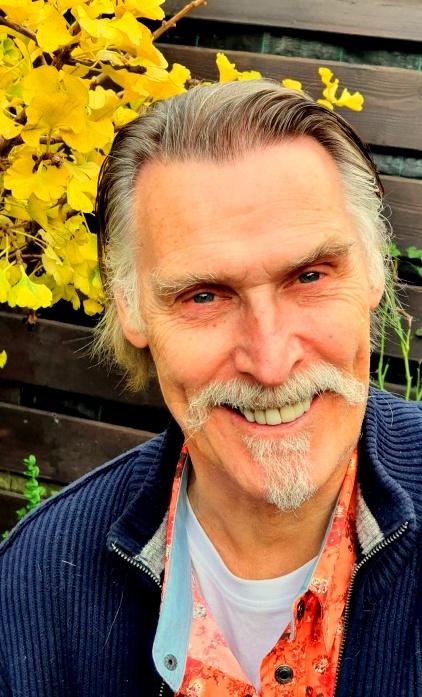
Ambro Louwe’s career does not follow the familiar route from art academy to studio, gallery, and museum. Born in Beverwijk, the Netherlands, in 1947, he developed as an artist alongside a long professional life in education. He worked as a teacher, school director, and cultural organizer, including six formative years as headmaster of the Dutch school in Jebel Ali, Dubai. This parallel life is essential to his art. It encouraged him to understand creativity not as an isolated studio activity, but as a way of testing relationships between people, materials, knowledge, and the environments they inhabit.
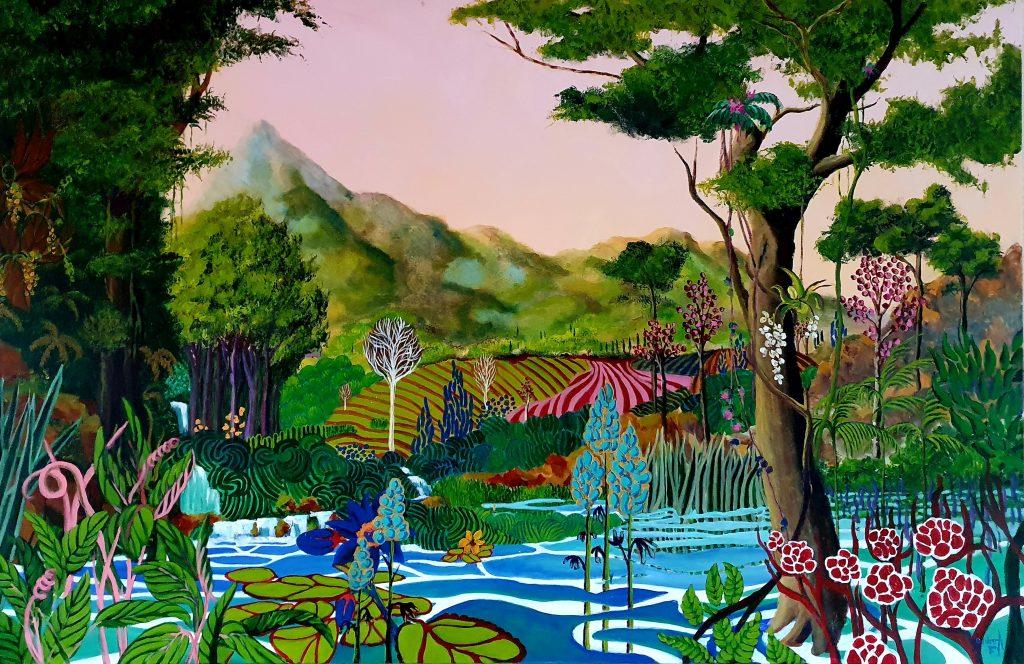
Dubai widened his visual language. The desert’s open horizon, intense light, and scale were radically different from the denser atmosphere of the Netherlands. Space began to function less as background than as an active presence, while color acquired greater freedom. What changed was not simply his subject matter, but his way of seeing: representation gradually became an investigation into how perception itself can be reorganized.
Knowledge Beyond the Studio
Louwe’s curiosity has always extended beyond art. Over the years he explored information engineering, law, psychology, systemic work, and medical care. These interests are more than biographical detail. They reveal a fascination with systems: how information is organized, how institutions shape behavior, how individuals function within social structures, and how body and mind respond to pressure and change.
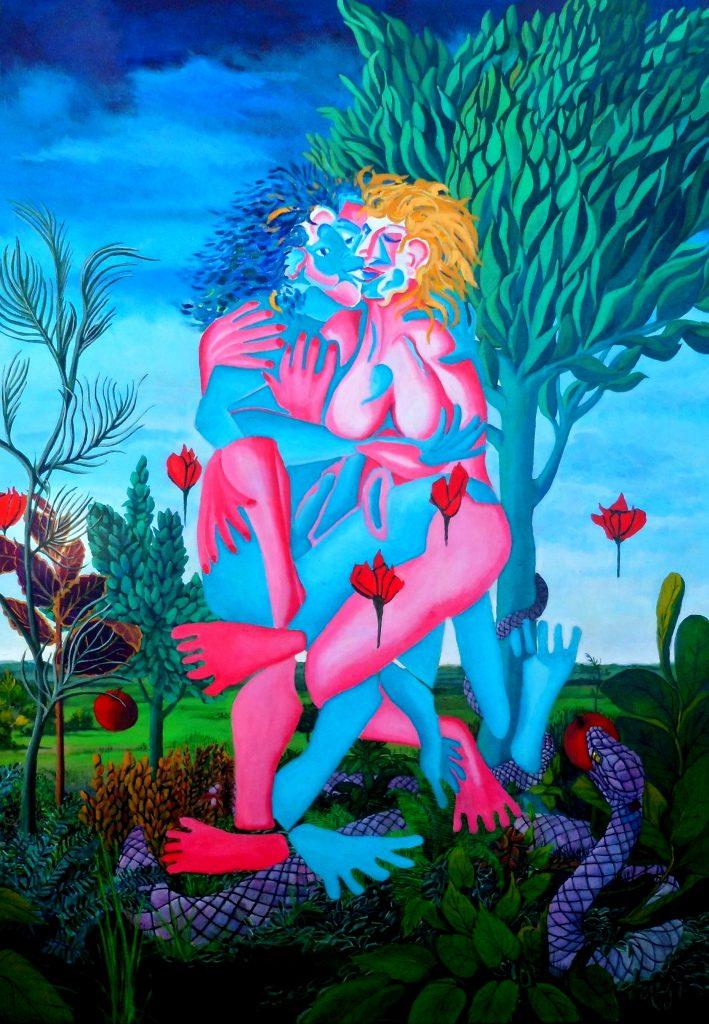
This breadth helps explain the psychological and social undertones of his work. His paintings do not illustrate theories; they stage conditions of uncertainty. Figures dissolve into color, stable compositions are interrupted, and spatial works change through the presence of others. Interdisciplinarity appears here less as a topic than as a way of thinking through form.
Between Figuration and Abstraction
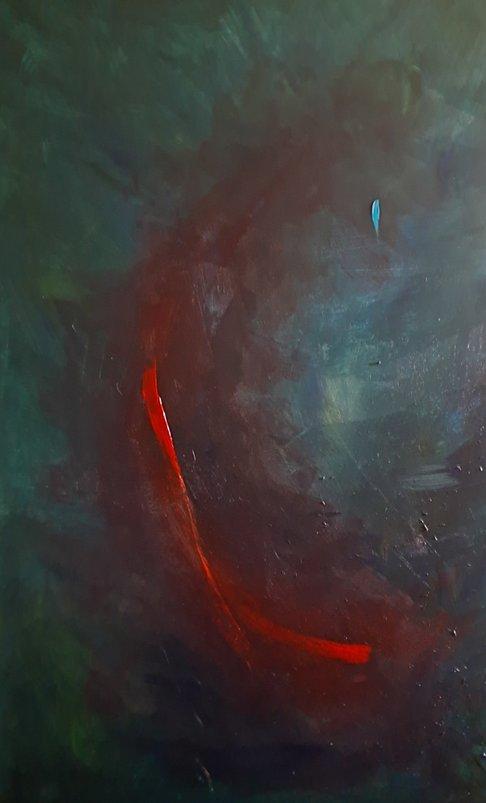
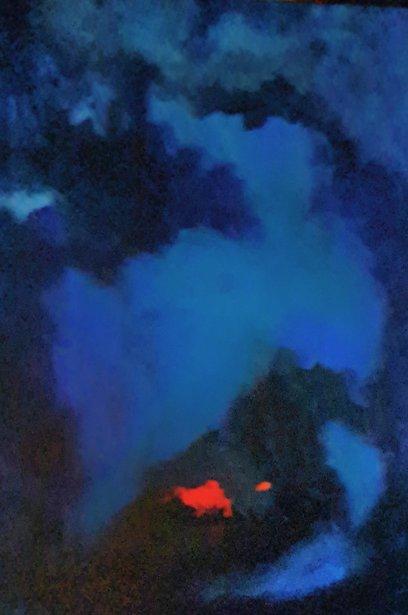
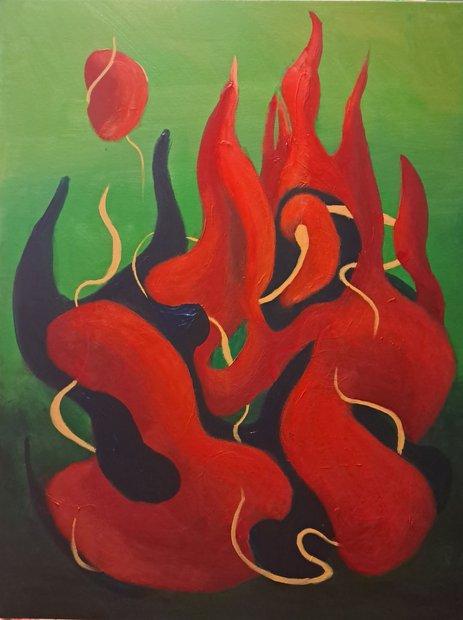
Louwe’s paintings inhabit the unstable territory between figuration and abstraction. Landscapes, flowers, human figures, and remembered places often provide a starting point, but they rarely remain descriptive. Forms stretch, collide, fragment, and sometimes disappear into chromatic fields. Recognition is present, yet continually placed under pressure.
Color is decisive. It would be too simple to describe Louwe merely as a colorist, because in his mature work color does not decorate form—it acts upon it. It separates, disrupts, accelerates, and sometimes breaks open the composition. His recent formulation, Under Tension, makes this clearer than ever. The painting becomes a field held between control and release, intention and accident, structure and rupture. The image does not solve these oppositions; it allows them to remain visible.
Body, Balance, and Material
Louwe’s longstanding engagement with Tai Chi offers another key to his method. Its relevance lies in a specific understanding of balance as dynamic rather than static. Stability is produced through continuous adjustment: weight shifts, force is redirected, movement is answered by counter-movement. Louwe’s studio process follows a comparable logic. An accidental splash, cut, or disruptive mark can become an event to which the rest of the painting must respond. Chance is not the final result; it creates a condition that demands artistic judgment.
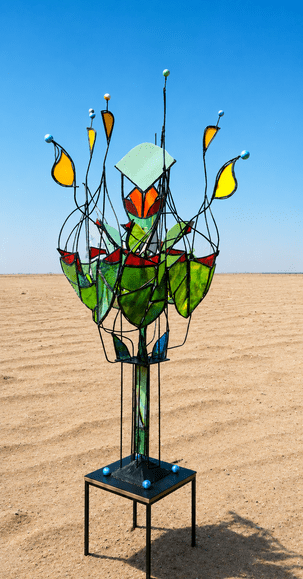
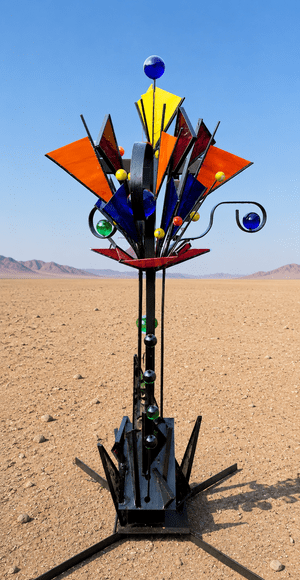
The same principle extends beyond canvas. His wallscapes, architectural interventions, and glass-and-steel sculptures make the environment part of the work. Glass changes with light; wall works reorganize a room; participatory projects incorporate the presence of others. Across media, the artwork becomes less a fixed object than a temporary balance between forces.
From Regional Practice to International Context
For many years Louwe’s practice developed through regional exhibitions, public projects, education, and specialist art networks. International visibility grew during the 2010s and early 2020s. Projects in Chongqing, Beijing, and Kaifeng opened his work to a broader context. This development was cumulative rather than sudden: decades of painting, sculpture, travel, teaching, and experimentation were gradually being read as one coherent practice.
Pashmin Art: Building a Curatorial Context
Pashmin Art has played an important role in this later development. In 2023, A Kaleidoscope of Art at Pashmin Art Gallery in Bad Tölz presented Louwe in a pluralistic context concerned with different approaches to visual experience. Later that year, Metamorphosis in Art in Hamburg offered a sharper framework. The idea of transformation was particularly appropriate to an artist whose works continually move between recognizable form and abstraction, control and spontaneity, image and environment.
A significant institutional step followed in 2025 with Reflections and Resonances: Contemporary Art in Historic Greiz, presented in the Museums of the Schloss- und Residenzstadt Greiz. Louwe’s mutable forms entered spaces shaped by history and cultural memory. Works built around instability and transformation were placed within architecture associated with permanence, allowing his practice to operate as a contemporary intervention into an inherited environment.
From Transformation to Tension
The 2026 Pashmin Art exhibition Structure · Exposure · Escape in Hamburg pushed this reading further. Presented with Mark Müller and Horst Wagner, Louwe occupied the position of imaginative reconstruction: an art capable of opening alternative realities when existing structures become restrictive. This represented an important shift in the language around his work. Instead of relying on familiar terms such as freedom, vitality, and colorfulness, the exhibition placed his paintings in relation to systems, vulnerability, and the possibility of escape.
Seen in this light, the recent Under Tension works are not a break with his earlier career but a concentration of it. The educator’s interest in development, the student of psychology and systemic thinking, the Tai Chi practitioner’s sense of shifting balance, and the painter’s fascination with color converge in an art that treats stability as provisional. His most compelling compositions are those in which harmony is not given in advance, but achieved briefly through negotiation.
An Art of Becoming
Louwe’s significance does not rest on one signature motif or historical movement. His practice has grown through education, travel, interdisciplinary study, bodily discipline, public engagement, and material experiment. What binds these experiences together is a conviction that form is never final and perception can always be reorganized.
His art therefore reaches beyond aesthetic pleasure. At its best, it asks how order is created, how it can be disturbed, and what may emerge when familiar structures stop holding. Psychological and social questions remain close to the surface, but Louwe invites introspection rather than prescribing conclusions.
The striking quality of his recent practice is not consolidation but continued openness. Louwe still exposes his language to uncertainty; his paintings sustain rather than resolve tension. In that refusal of closure lies the strongest continuity of his career: artistic freedom understood not as unrestricted spontaneity, but as the capacity to remain responsive while form and meaning are still becoming.
© The copyright of the text belongs to Dr. Davood Khazaie
Find out more at Mr. Ambro Louwe’s website